Project Case Study
AI-Powered Plagiarism Checker
An academic integrity tool that analyzes text similarity using Python NLP models and presents results through a clean Laravel interface.
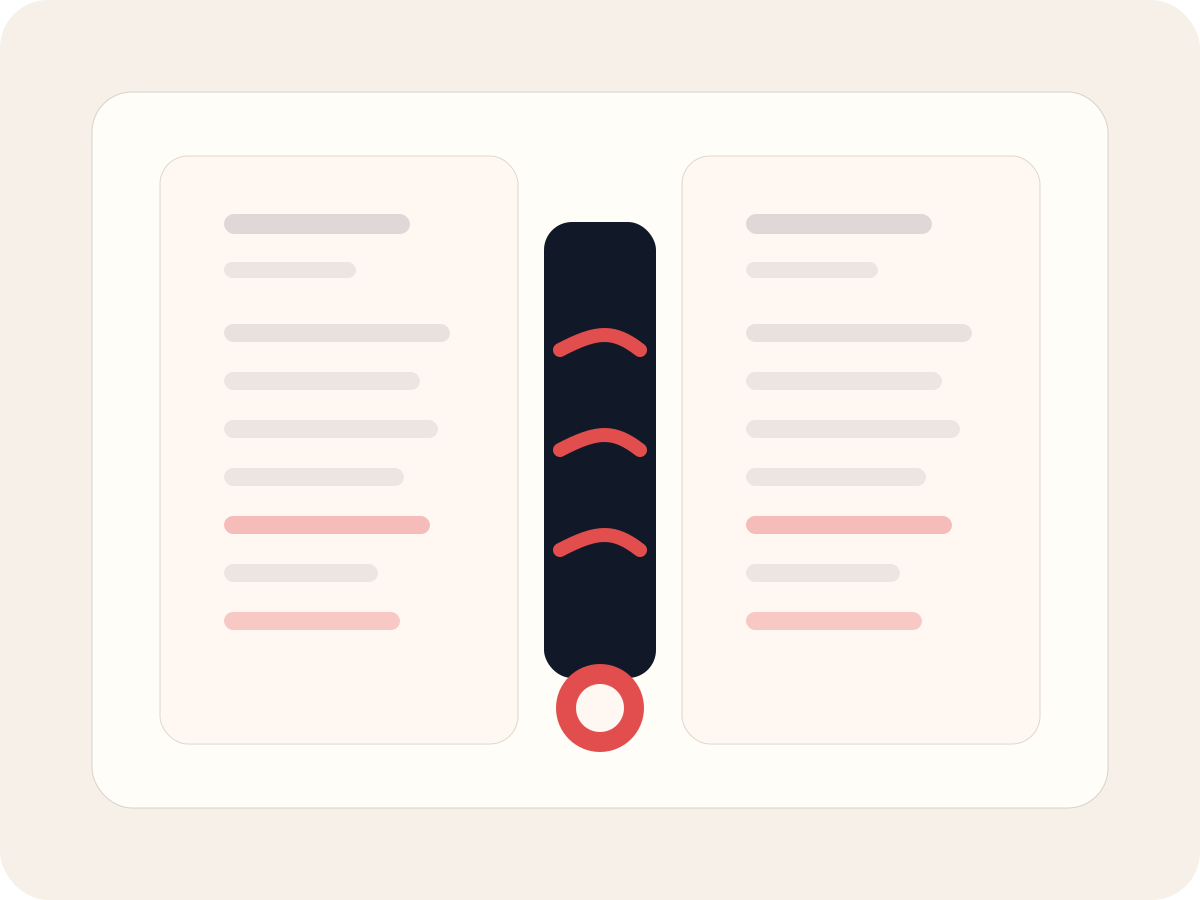
Problem
Plagiarism detection is often handled by tools that feel opaque, slow, or difficult for users to interpret. For academic environments, accuracy matters, but so does clarity in how results are presented.
Context
This project was built as an academic system that combined backend NLP analysis with a user-facing reporting interface. The goal was not only to detect similarity, but also to make the findings easy to read.
Goal
Create an AI-driven plagiarism checker that could flag duplicated or highly similar text while keeping the reporting flow simple and understandable.
Solution
The solution combined a few focused parts:
- Python NLP models for text similarity analysis.
- A Laravel-based interface for submission and result viewing.
- SQLite storage for lightweight persistence and quick turnaround.
- A reporting flow designed to surface results clearly instead of overwhelming the user.
Process
I started by separating the analytical problem from the interaction problem. Once the similarity logic was in place, I focused on how users would upload text, receive results, and interpret the output without confusion.
Challenges
The main challenge was balancing computational analysis with user trust. If a report looks too technical, it becomes harder to act on. If it is oversimplified, it loses value. The interface had to sit in the middle.
Outcomes
- Built a working plagiarism detection system powered by NLP models.
- Delivered a clean interface that made results easier to understand.
- Demonstrated an applied use of AI in an educational context rather than a purely experimental one.
Reflection
This project reinforced how important explanation is in AI tools. A technically correct output is not enough if the person using the system cannot confidently interpret it.